
Fitch on Tuesday affirmed India's sovereign rating at 'BBB-' with a stable outlook, on robust growth and resilient external finances, but said weak public finances remain a challenge. India's rating has been unchanged at 'BBB-', which is the lowest investment grade, since August 2006. "Fitch Ratings has affirmed India's Long-Term Foreign-Currency Issuer Default Rating (IDR) at 'BBB-' with a Stable Outlook," it said in a statement, adding strong growth potential is a key supporting factor for the sovereign rating.

'We like certain stocks from banking, insurance, retail, hospitals and capital goods.' 'Though some of these stocks may seem expensive, they will compound well over the long term, thus justifying their current multiples.'

Following are the highlights of the Economic Survey 2022-23 tabled in Parliament on Tuesday
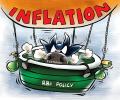
The Reserve Bank on Friday retained its inflation projection for current fiscal year at 6.7 per cent amid global geopolitical developments triggered by Russia-Ukraine war. RBI Governor Shaktikanta Das said the impact of inflation globally is weighing heavily on the domestic market. For September quarter of 2022-23, RBI projected retail inflation at 7.1 per cent.
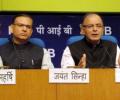
All credit to the finance minister for walking the fiscal and expectation tightrope extremely well in his budget speech, says Ganesh Natarajan.

The Adani group will be generating almost 90 percent of its Ebitda (earnings before interest, tax, depreciation, and amortisation) from infrastructure business by 2025 as compared to 83 per cent generated from these businesses currently, top company officials told bankers recently. Of the infrastructure business, 49 per cent of the profits are currently contributed by energy and utility, another 25 per cent by transport and rest by cement and logistics businesses. This will go up substantially as several new projects like Navi Mumbai airport and other projects get commissioned and contribute to the overall Ebitda pie, bankers were told.

The government plans to borrow a record Rs 15.4 lakh crore from dated securities in FY24 to meet its expenditure requirement to prop up the economy.

At a time when major economies have increased spending, India will have to do the same.

India should become a middle-income country and then push to make INR (rupee) a hard currency, and till then, it must promote the settlement of global trade in the local currency, think tank GTRI said on Sunday. Global Trade Research Initiative (GTRI) said that transforming a currency into a hard currency is a complex process that hinges on several pivotal factors. Firstly, economic stability is paramount; a country must exhibit low and stable inflation, consistent growth, and a balanced trade environment.

While the fiscal year has just begun, any windfall surplus will be welcomed by the government as it bids to meet the fiscal deficit target of 5.9 per cent of GDP, amidst lack of clarity on exactly to what extent will recession in the West impact India's trade and tax collections.

S&P Global Ratings on Monday kept its forecast for India's economic growth unchanged at 6 per cent in the fiscal year starting April 1, before rising to 6.9 per cent in the following year. In the quarterly economic update for Asia-Pacific, S&P saw inflation rate easing to 5 per cent in 2023-24 fiscal, from 6.8 per cent in the current financial year. It saw India's gross domestic product (GDP) likely growing by 7 per cent in the current financial year ending March 31 (2022-23), before slowing to 6 per cent in the next 2023-24 fiscal.

Indian IT services sector's revenue growth will slow down to 3 per cent in the current fiscal from 9.2 per cent in the previous financial year, a domestic ratings company said on Tuesday. Icra Ratings said the profitability will also take a beating in this financial year and the operating profit margin will narrow by up to 1 percentage point to 20-21 per cent. The topline growth will come down to 3-5 per cent in FY24 from the 9.2 per cent posted in FY23, the agency said, attributing the slowdown to softening demand.

The IMF on Tuesday projected a growth rate of 6.1 per cent for India in 2023, which is a 0.2 percentage point upward revision compared with the April projection. This is reflective of the "momentum" from stronger-than-expected growth in the fourth quarter of 2022 as a result of stronger domestic investment, the International Monetary Fund (IMF) said. "Growth in India is projected at 6.1 per cent in 2023, a 0.2 percentage point upward revision compared with the April projection," it said in its latest update of the World Economic Outlook.

The Budget may see new rural schemes and stepping up of funding towards existing programmes like MNREGA, rural housing, irrigation projects and crop insurance.

Sluggish rural demand along with higher inflation is set to mute revenue growth of the fast-moving consumer goods (FMCG) sector at 7-9 per cent this fiscal and the next compared to 8.5 per cent in the previous fiscal, a report said. Almost 40 per cent of the Rs 4.7-lakh-crore sector come from the hinterland markets, which have been hit by high inflation, low wages and high job losses since the Covid pandemic. Revenue growth of the FMCG sector will be muted at 7-9 per cent this fiscal and the next compared to 8.5 per cent in the last, while volume growth will be just about 1-2 per cent, down from 2.5 per cent last fiscal, Crisil said in a report on Monday.

As the clean-up has taken hold, loan growth slipped to 10.7 per cent in the last fiscal

'While the Budget would be growth-friendly, it would not come at the expense of an increase in the fiscal deficit.'

The corporate income tax breaks make up a relatively small part of $80 billion in business giveaways.

The Reserve Bank on Wednesday projected retail inflation to ease to 5.3 per cent in next fiscal from 6.5 per cent this year on assumptions of lower imported inflation, even though core inflation remains sticky. The RBI's inflation outlook for current fiscal has improved from 6.8 per cent projected earlier, to 6.5 per cent, on the back of steeper than expected decline in vegetable prices and Indian basket of crude at $95 a barrel. "Looking ahead, while inflation is expected to moderate in 2023-24, it is likely to rule above the 4 per cent target.

Crypto assets should not be granted official currency or legal tender status, the much-awaited synthesis paper by the International Monetary Fund (IMF) and Financial Stability Board (FSB) has said ahead of the G20 leadership summit under India's presidency. However, the report has argued against a blanket ban on activities linked to crypto assets, explaining that such a move can be costly as well as technically demanding to enforce. Central banks should avoid holding crypto assets in their official reserve as they pose a risk to monetary and global financial stability, according to the synthesis paper.

In a recent note, the global brokerage firm said India now commands a weight of 19 per cent in the above-mentioned portfolio as compared to 18.2 per cent in September 2023. India, it said, is a large liquid market and remains a counter-weight to North Asia if a slowdown in the West occurs and China's recovery disappoints.

People from different sectors react to Budget 2013
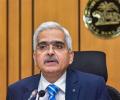
The RBI raked in a massive net income gain from foreign exchange currency sales as a buffer for the rupee during tumultuous geopolitical upheavals last year owing to Russia's invasion of Ukraine.

The International Monetary Fund (IMF) warned on Tuesday that India's general government debt (comprising both central and state government debt) could exceed 100 per cent of gross domestic product (GDP) in the medium term. It also cautioned that long-term debt sustainability risks are high due to the significant investment required to meet India's climate change mitigation targets. The Indian government, however, disagreed, arguing that risks from sovereign debt are extremely limited as it is predominantly denominated in domestic currency.

India's trade account could come under pressure and there could be an inflation push if crude oil prices remain above the $90 per barrel (Brent) for a prolonged period since India imports over 85 per cent of its oil and roughly 50 per cent of its gas. A rebound in economic activity is bound to lead to higher fuel demand. While India is the third-largest importer of crude, it is a net exporter of refined products, which helps to compensate to some degree.

The 54-page document tabled in Parliament detailed how the Modi-government pull the economy from being counted among the most fragile-five in the world to being the fasted growing and the most attractive investment destination.

This demand comes at a time when the government is falling short of its revenue targets due to dwindling tax and low disinvestment receipts. It could account for the dividend in the upcoming Union Budget on February 1. RBI is, however, yet to take a final call on the government's demand and might decide on this at its central board meeting scheduled for February 15 in New Delhi.

Fuelled by robust market demand and higher revenues, InterGlobe Aviation on Thursday flew into the profitability zone, raking in a net profit of Rs 919.2 crore in the March quarter. The parent of the country's largest airline IndiGo, which had faced turbulence last year, had a net loss of Rs 1,681.8 crore in the three months ended March 2022. Reflecting the bullishness in the aviation market, the carrier has forecast a 5-7 per cent rise in Available Seat Kilometres (ASK), an indicator of seat capacity, in the June quarter.

'With China falling out of favour, India is where investors see the demographic and digital dividend apart from the benefits of reforms playing out.' 'Your prime minister has also done a great job of sharing this story with the world.'

India's economy is projected to slow to 6.5 per cent in the fiscal year starting April but will remain the fastest growing major economy in the world as it fared better in dealing with the extraordinary set of challenges the globe has faced, the Economic Survey 2022-23 said on Tuesday. India's gross domestic product (GDP) growth of 6.5 per cent in 2023-24 compares with an estimated 7 per cent expansion in current fiscal year (April 2022 to March 2023) and 8.7 per cent in the previous year. Like the rest of the world, India too faced an extraordinary set of challenges in tightening financial conditions and supply chain disruptions from a prolonged war in Europe but "withstood them better than most economies", the annual document detailing the state of the economy said.

For fiscal year FY23, the 2022 Union Budget had targeted a capex outlay of Rs 7.5 trillion, which is 35.4 per cent higher than the FY22 Budget Estimate of Rs 5.54 trillion.

The undistributed funds totalling over Rs 25,000 crore lying with the capital markets regulator Sebi's account have come back into focus after the demise of Sahara Group's chief Subrata Roy. Roy passed away in Mumbai on Tuesday night at the age of 75 after battling a prolonged illness. He faced multiple regulatory and legal battles in connection with his group firms that were accused of circumventing regulations with ponzi schemes, allegations his group always denied.

The Indian economy will grow at around 6.5 per cent in the current fiscal, notwithstanding high crude oil prices and increased uncertainty due climate changes, NITI Aayog member Arvind Virmani said on Thursday. Virmani also asserted that the gross household savings ratio in India has consistently gone up. In an interview with PTI, he said: "My growth projection (of India's GDP growth) is 6.5 per cent plus minus 0.5 per cent... because my experience is that the fluctuations in global GDP more or less has balanced out for us, assuming normal changes."
The Reserve Bank of India on Thursday marginally lowered its inflation projection for the current financial year to 5.1 per cent, as Governor Shaktikanta Das said the central bank's monetary policy actions are yielding the desired results. In April, the Reserve Bank had estimated the consumer price index (CPI) based retail inflation at 5.2 per cent during the fiscal 2023-24. CPI inflation fell sharply to 4.7 per cent in April 2023, from 6.4 per cent in February, on the back of favourable base effects, with softening observed across all the three major groups.

Modi govt faces extra spending burden due to policies like 7th Pay Commission and OROP

India appears poised to sustain its growth in a more durable way than before with the economy carrying the momentum from FY23 into the current fiscal year, the Annual Economic Review for 2022-23 released by the finance ministry on Thursday said. However, the report cautioned that escalation of geopolitical stress, enhanced volatility in global financial systems, sharp price correction in global stock markets, a high magnitude of El-Nino impact, and modest trade activity and FDI inflows, are factors that could constrain the pace of growth. "Should these developments deepen and dampen growth in the subsequent quarters, the external sector may challenge India's growth outlook for FY24," the finance ministry said.

The parlous state of Asia's third largest economy was reflected in the rupee's 18 per cent plunge against the dollar to all time lows since May, when signals emerged that the US Federal Reserve was considering winding down an easy money strategy that had benefitted emerging markets like India.

The Centre has projected reining in its fiscal deficit at 3.3 per cent of GDP in FY19.

'The global situation is not very good.'

Fitch Ratings on Tuesday affirmed India's sovereign credit rating at 'BBB-' with a stable outlook, saying the rating derives strengths from the country's robust growth outlook and still-resilient external finances. It said India's robust medium-term growth outlook is a key supporting factor for the rating. A clear improvement in corporate and bank balance sheets, which were under strain prior to the pandemic, is likely to facilitate a steady acceleration in investment in the coming years.
